
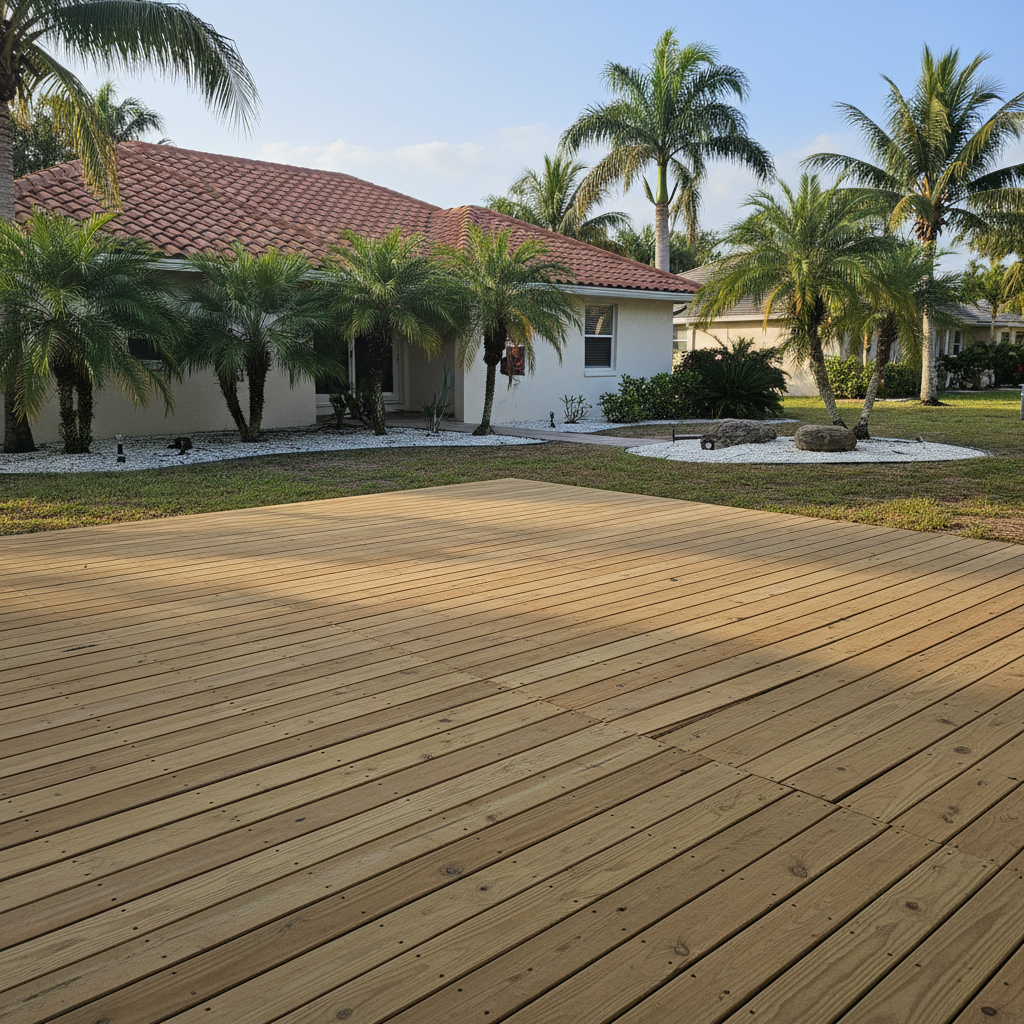
Anybody with a circular saw and a truck can call themselves a deck builder. In Hialeah, where the ground is mostly limestone under a few inches of sandy fill and the weather swings from bone dry to a wall of rain by August, the difference between a good builder and a bad one shows up in year two, not day one. Here's what actually separates them.
Permits are not a suggestion here
Miami-Dade County is a High Velocity Hurricane Zone. That's not a marketing phrase, it's a building code designation, and it changes what's legal to install. Fasteners, railing hardware, even some structural connectors need a Notice of Acceptance (NOA) on file with the county before they can go on a permitted job. A builder who doesn't know what an NOA is, or waves off the question, isn't working in compliance with local code. That's a problem whether the deck is attached to a 1960s block house in East Hialeah or sitting behind a newer place out toward Miami Lakes.
Most deck jobs here need a permit through the City of Hialeah or Miami-Dade, depending on the address, and you should expect at least two inspections: one on the footings before any concrete gets poured, and a final once the structure and railings are done. A deck attached to the house with a ledger board usually gets a framing inspection too, because that connection is where water gets in and where decks come loose in a storm. If a builder tells you permits are a waste of time or money, that's your sign to call someone else. It's also the single easiest thing to check before you hire anyone: ask for the permit number once it's pulled, and look it up yourself.
What's actually under the deck matters more than what's on top
A lot of Hialeah lots sit on oolitic limestone a foot or two below grade, with sandy fill on top and a water table that can sit close to the surface, especially after a wet summer. Footings here often get dug or augured down to rock rather than just to a standard frost depth, because there's no frost to worry about, but there is soft fill that won't hold a post reliably on its own. A builder who pours a 12-inch footing into loose sand without checking what's underneath it is setting you up for a deck that racks or sinks on one corner within a few years.
If the deck attaches to the house, ask how the ledger board gets flashed. This is the single most common failure point on attached decks everywhere, not just here: water gets behind an unflashed ledger, soaks the rim joist, and you don't see it until the boards start feeling soft underfoot. On a block house that's less of an issue structurally, but the flashing detail at the ledger still has to be right or you're trapping water against stucco and framing that was never meant to stay wet.
Material choices that actually hold up to this climate
South Florida humidity, UV, and afternoon thunderstorms from June through November are hard on decking. Pressure-treated pine is the cheapest option and it will work, but it needs sealing on a schedule, not whenever you remember. In this climate that's closer to every 12 to 18 months, not the two-to-three-year interval you'll hear quoted up north. Skip it and the wood checks and cups within a couple of summers.
Composite decking costs more up front but doesn't need staining or sealing at all, and it handles the heat better without drying out the way wood does. It still gets hot enough to burn bare feet in July, that's just physics, not a defect. For fasteners, insist on stainless steel, ideally 305 or 316 grade, or hot-dip galvanized rated for coastal exposure. The cheap electro-galvanized screws you'll find at a big box store will bleed rust streaks into the decking within a year or two out here, humidity and salt air see to that even this far inland.
If you're building a screened-in deck or a pool deck, ask what's rated for both the structure and the screen enclosure, since those are usually separate permits and sometimes separate trades. A pool deck also needs the right slope, generally a quarter inch per foot away from the house, so water doesn't pool against the foundation during a downpour. On older Hialeah streets where the storm drainage wasn't built for today's rainfall, getting that slope wrong means standing water on your deck for a day after every big storm.
Questions worth asking before you sign anything
- Will you pull the permit yourself, or do I need to? If a builder asks you to pull it so the job stays off their record, that's a red flag.
- What's the footing depth and how will you confirm what's below grade before you pour?
- What fastener grade are you using, and is it NOA-listed for this county?
- How long before I can walk on it, and how long before furniture goes back on?
- What's the warranty on labor, separate from whatever the material manufacturer covers?
A straight answer to all five takes under two minutes. A builder who gets vague, defensive, or starts talking about how busy they are instead of answering, that tells you something too.
What to walk away from
Walk away from any quote with no permit line item at all, as if the job doesn't require one. Walk away from a price that's dramatically lower than two other bids for the same square footage and the same material, because the gap usually comes out of footing depth, fastener grade, or flashing detail, and you won't see which one until it fails. Walk away from anyone unwilling to put the payment schedule in writing, since a deck job that's paid in full up front gives you no leverage if the work stalls halfway through.
A reasonable timeline for a standard attached deck, once the permit is approved, runs about one to two weeks of actual build time, plus whatever the county takes to schedule inspections in between. Concrete footings typically need to cure for a few days before you can frame on top of them, so a rushed schedule with no gap for that is worth questioning.
None of this is complicated, it just takes a builder who's done it on this ground, in this weather, enough times to know where the problems actually show up. That's the kind of work we do at Fortis Deck Co, and it's a fair set of questions to bring to anyone you're considering, us included.