Every job below is one we do ourselves across Hialeah.
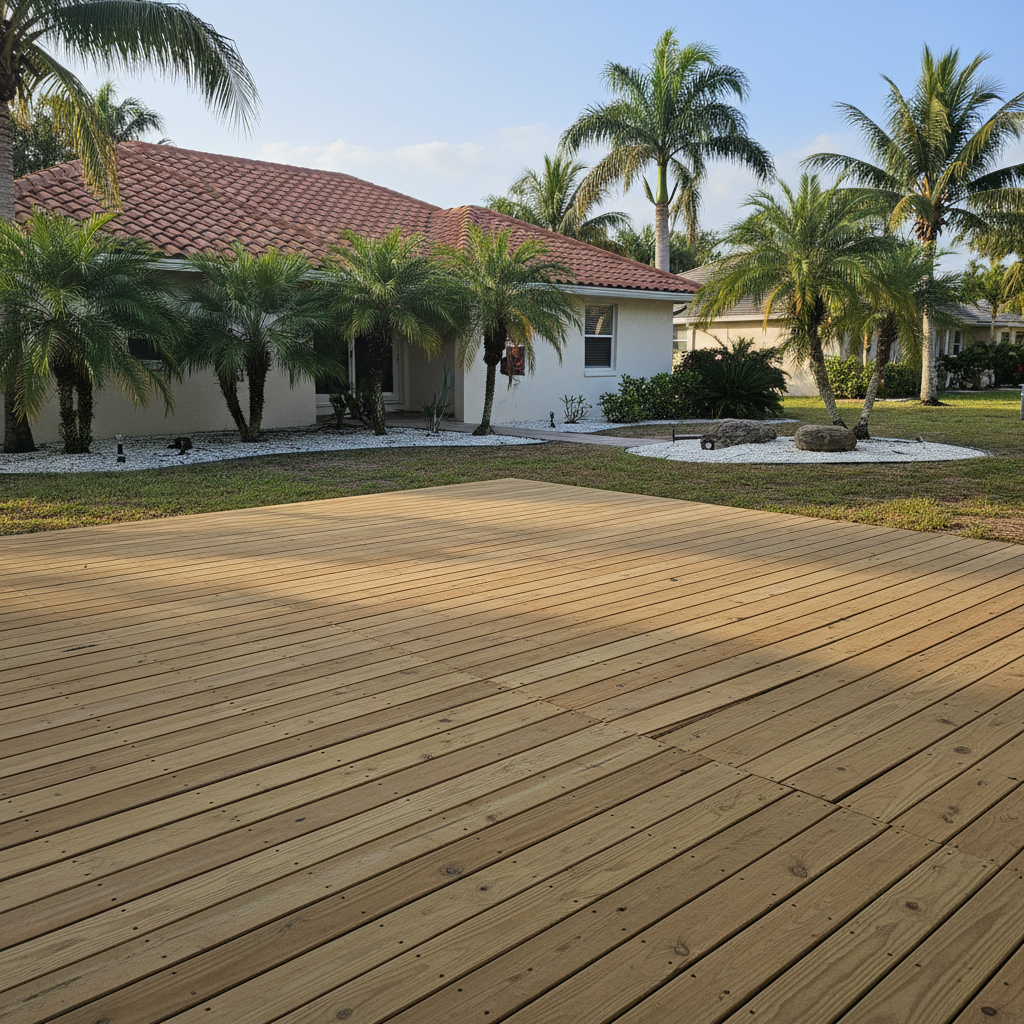
We build from the footings up. Each post sits on a concrete footing poured below grade, not just set on a paver, so the structure doesn't shift when the ground moves after a heavy rain season. We frame with pressure-treated joists on 16-inch centers and joist hangers rated for Florida's wind load, then decide on wood or composite for the decking itself.
Soft spots in the decking usually mean a joist underneath has rotted out, not just the board on top. We pull the bad boards, check the joists and ledger board for water damage, and replace what's compromised instead of screwing a new board over a weak frame. A loose railing almost always traces back to a post that's lost its grip in the footing.
South Florida sun breaks down wood fiber fast, and without a fresh coat of sealant every year or two, pine decking greys out and starts to splinter. We pressure wash first to open the grain, let it dry fully, then apply a penetrating sealer or solid stain depending on how much of the wood grain you want to still see.
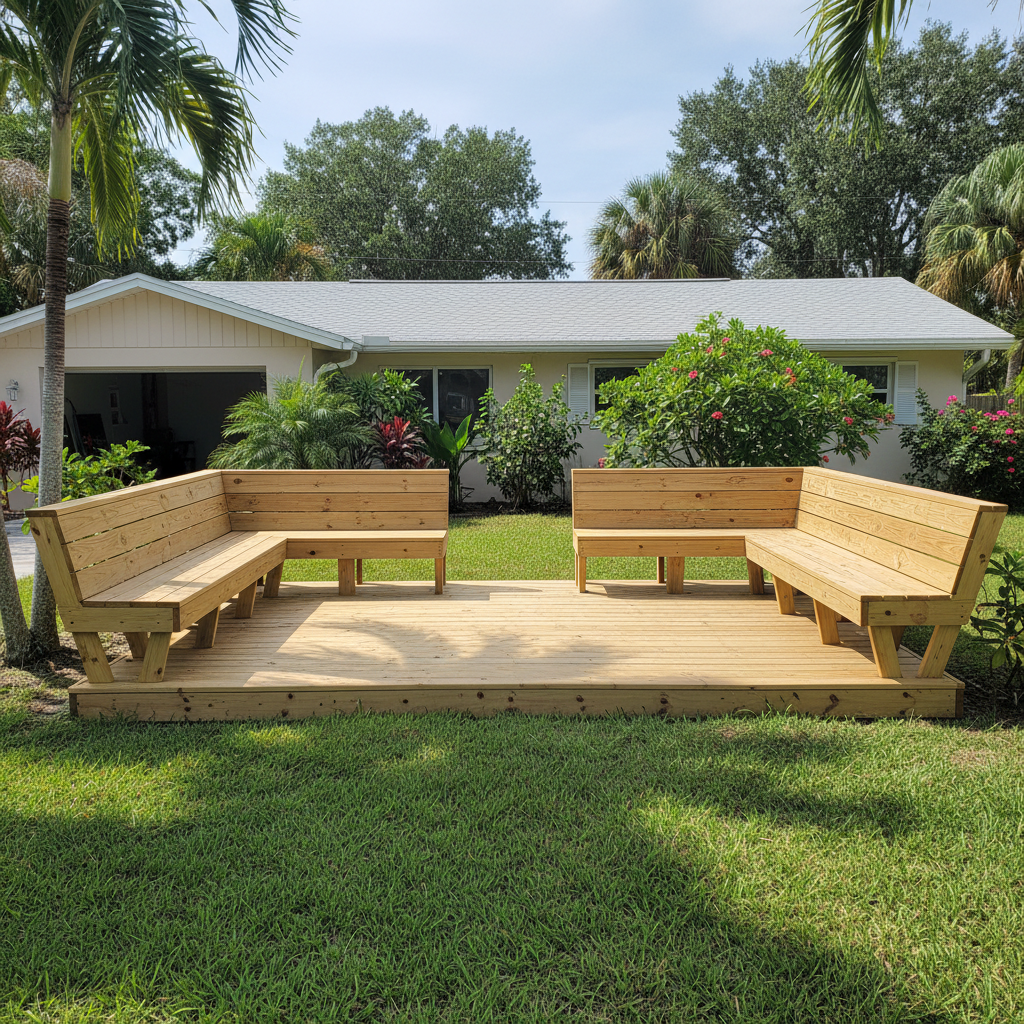
Some decks need to wrap around a pool, step down to a yard, or work around an odd lot line. We'll sketch the layout, figure out where the ledger board attaches to the house and whether that wall can take it, and size the footings for whatever you want on top, whether that's a hot tub or just a dining set.
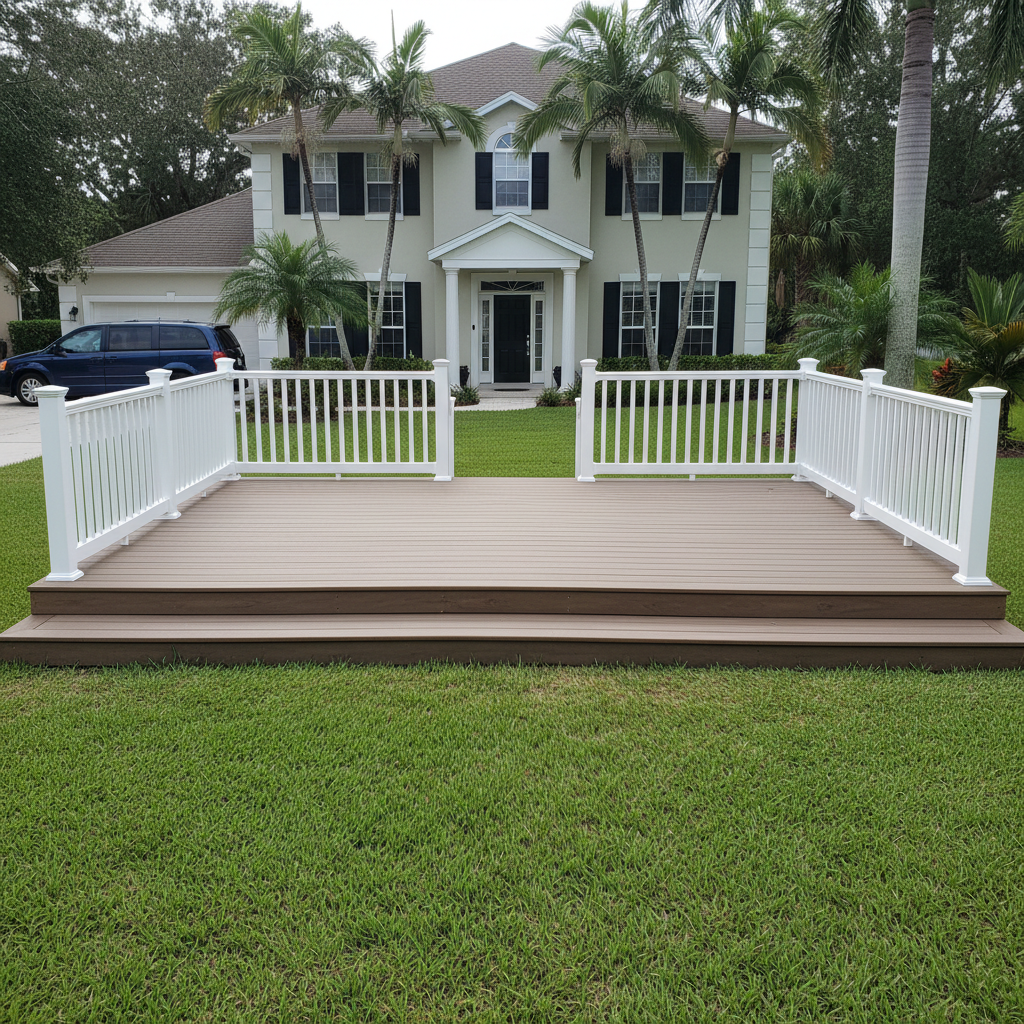
Composite boards like Trex or TimberTech cost more upfront but don't rot, warp, or need staining, which matters in a climate that's hard on wood year-round. The framing underneath is usually still pressure-treated lumber, we just swap the decking and fascia. Board spacing and fastening pattern are different from wood too, so we follow the manufacturer's spec to keep the warranty valid.
Railing height code is 36 inches for most residential decks, 42 for pool enclosures in a lot of jurisdictions, and we check whichever applies before we set a single post. A railing that wobbles is almost always a post bolted into rotten wood rather than through to a solid joist. We can rebuild just the railing without touching the decking if the frame underneath is still sound.
If the frame is solid but the boards are cupped, cracked, or just outdated, we can strip the decking down to the joists and start fresh without rebuilding the whole structure. This is usually faster and cheaper than a full rebuild and a good option if the deck is still structurally sound. We check joist spacing and hanger condition before committing to resurfacing instead of a tear-down.
A screen enclosure keeps the no-see-ums and mosquitoes out without blocking the breeze, which matters more here than almost anywhere else. We frame the screen cage to tie into the existing roofline or build a standalone structure, and the footings have to account for wind load on the screen panels, not just the deck itself.
Sometimes the cheapest fix is starting over, especially if the ledger board has rotted where it meets the house. We tear out the old decking, railing, and framing down to the footings and haul everything off, then tell you honestly whether the old footings are worth reusing.
A deck around a pool has to handle standing water and chlorine splash without the boards cupping or the fasteners corroding. We use coated or stainless fasteners near pools and keep decking a few inches above the pool deck's drainage slope so water doesn't pool against the house.
Four steps, and no surprises in any of them.
You tell us what you want doing, we look at what is actually there, and we ask the awkward questions early.
In writing, itemised, free. If something might add cost later we flag it now rather than at the end.
Same crew throughout. We cover your floors, keep the dust down and tidy up before we leave each day.
You point out anything you are not happy with and we fix it before the invoice, not after.
Deck installation and repair covers the towns below within about an hour's drive.
Things that come up once a deck project is actually underway.
Describe the problem and we will tell you what it probably is. No obligation.